
Hawaiʻi Island Destination Management Action Plan 2021-2023
The linked documents on this page are provided for historical reference only. They are no longer current and may not meet current accessibility standards. If you experience difficulty accessing information in these archived files, please contact our office at [email protected] or call us at (808) 973-2255. We will do our best to assist you in accessing the information or providing it in an alternative format. To return to the latest DMAPs, click here.
Raising resident sentiment on Hawaiʻi Island
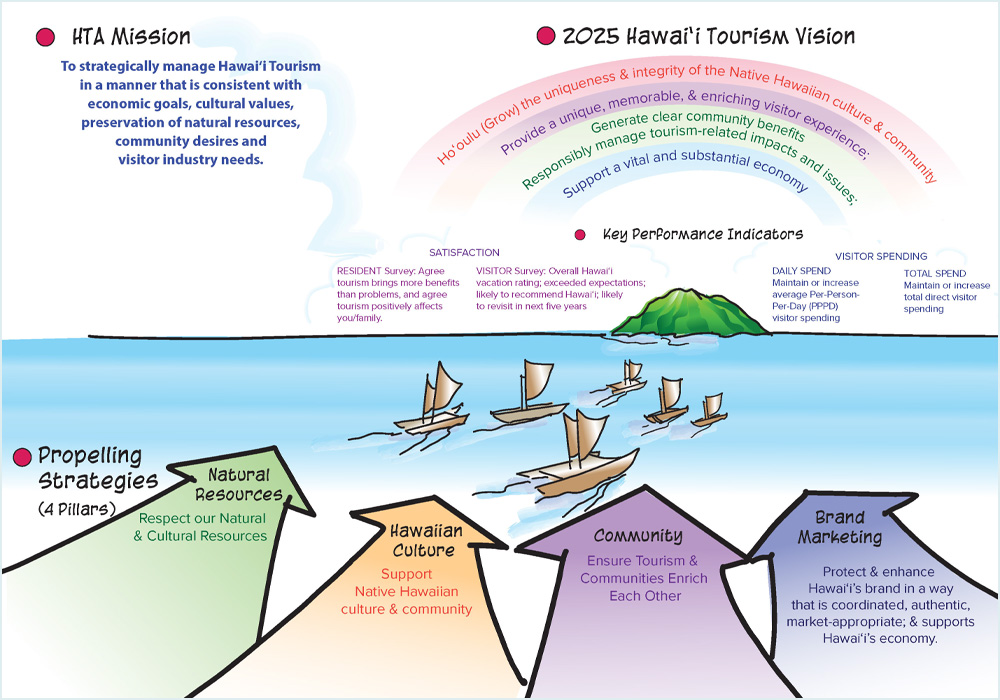
Destination Management actions seek to expand the benefits of tourism for resident quality of life, and made measurable impacts on Resident Sentiment, one of HTA’s Key Performance Indicators, over the lifespan of this DMAP. From a baseline 49% of Hawaiʻi Island residents agreeing that “Tourism has brought more benefits than problems,” in Fall 2021, destination management activities contributed to a rise to 54% in Spring 2024.
Constituent measures of Resident Sentiment include:
- Agreement that “Tourism is being better managed on my island”: 37% of Hawaiʻi Island residents agreeing in Fall 2021 rising to 48% in Spring 2024.
- Agreement that “More effort is being made to balance economic benefits of tourism and quality of life for residents”: 38% of Oʻahu residents agreeing in Fall 2021 improving to 47% in Spring 2024.
Source: HTA Resident Sentiment Surveys Fall 2021, Spring 2024
The foundation of the Hawaiʻi Island Destination Management Action Plan (DMAP) was based on the Hawaiʻi Tourism Authority’s HTA’s Strategic Plan 2020-2025. A steering committee, made up of individuals from the community, visitor industry, and other sectors, developed draft action items for the DMAP. The plan served as a three-year roadmap focused on tourism recovery and rebuilding efforts. The HTA Board of Directors approved the draft DMAP in February 2021.
The Hawaiʻi Island DMAP focused on several key initiatives to manage tourism responsibly and enhance the visitor and resident experience. Efforts included the Kaʻū Hoa Pili ʻĀina Stewardship Training Program and the improvement of signage and place-based visitor education at sites such as Waipiʻo Valley and Pololū. These actions aimed to balance tourism with the preservation of Hawaiʻi Island’s environment and cultural diversity, promoting sustainable practices and community well-being.
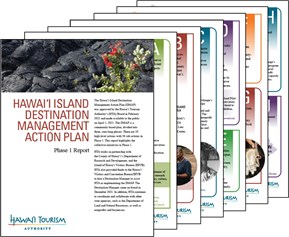
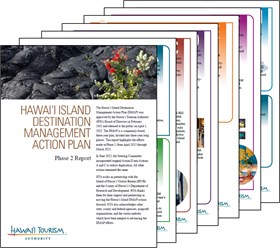
Click or tap on the cover to read the DMAP.
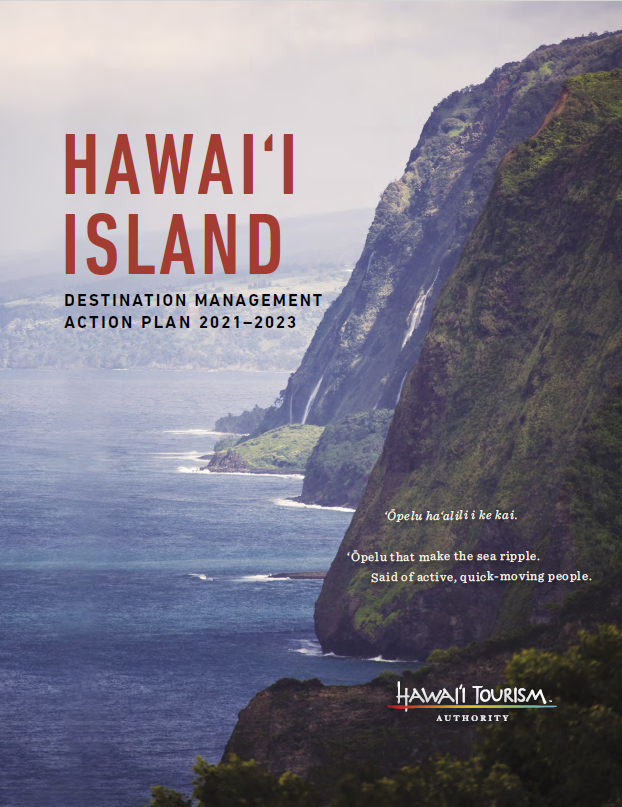
HTA developed the Hawaiʻi Island Destination Management Action Plan (DMAP) over the course of four months in partnership with the County of Hawaiʻi. The County of Hawaiʻi developed four cohorts, or action-specific working groups, which represent the four goals of its Tourism Strategic Plan. A steering committee representing members of the community, visitor industry and other sectors are part of one of the cohorts that support the implementation of the DMAP. In addition, five steering committee meetings took place. The community also had the opportunity to provide feedback through a community meeting in November 2020 and an online webform. The Steering Committee met via Zoom, and professional meeting facilitators assisted with bringing out the members’ ideas. The DMAP writers, along with HTA and the County, crafted the plan. The draft DMAP was approved by the HTA board in February 2021. The final approved DMAP was shared with the public in March 2021.
Community Meetings
A facilitated Hawaii Island Community Destination Management Action Plan community meeting was held on November 17, 2020. Over 185 residents attended the meeting. The purpose of the two-hour meeting was to explain the DMAP process to the public, share the proposed draft actions, and have the public provide feedback to the proposed draft actions. View the meeting’s PowerPoint presentation.
Online Input Form
Hawaiʻi Island residents were able to review the proposed draft actions developed by the Hawaiʻi Island Steering Committee. HTA used an online input form for the public to provide more detailed input and feedback. The deadline for feedback was November 11, 2020.
Click here to view the results from the online input form.
Development of the Hawaiʻi Island DMAP 2021-2023
HTA worked with the County and Island of Hawaii Visitors Bureau to finalize the plan, including identifying responsible parties and phasing for implementation. All actions were created and developed by the Steering Committee with community input. The DMAP was approved by the HTA board on February 25, 2021. To view the Hawaiʻi Island DMAP 2021-2023, click here.
The Steering Committee was comprised of residents of Oʻahu. Members represent not only the communities that they live in, but also the visitor industry, different business sectors, community and non profit organizations. They guided and developed suggested actions for Hawaiʻi Island’s Destination Management Action Plan.
|
Micah Alameda* |
Craig Anderson |
Ross Birch* |
|
Kaiulani Blankenfeld |
Ulu Ching |
Tane Datta |
|
Jessica Ferracane |
Cheryl Kauhane Lupenui |
Kaiu Kimura |
|
Kuuipo Kumukahi* |
Wendy Laros |
Bob Masuda** |
|
Margo Mau Bunnell |
James McCully† |
Linda Nako |
|
Jesse Potter |
Rachel Solemsaas |
Pomai Weigert |
|
Miles Yoshioka |
Charles Young |
Kuhao Zane |
* Member of the original Steering Committee, but no longer serving on the Committee.
** Steering Committee member as of Summer 2021.
† Steering Committee member as of Summer 2022.
To view the Implementation Reports, click on the links or pages below.